

By Alex Rivera, Certified Mechanical Engineer & Hydraulic Systems Specialist
Have you ever changed a tire and felt a moment of quiet triumph as the car rises smoothly on a hydraulic jack? That’s more than just task completion—it’s the direct, tactile experience of perfect hydraulic balance. As a mechanical engineer who has designed and troubleshot industrial hydraulic systems for over a decade, I find this precise moment deeply satisfying. It represents the flawless translation of fundamental physics into reliable, powerful motion.
This article aims to bridge the gap between abstract engineering principles and lived experience. We’ll explore what hydraulic balance truly means, why achieving it is so crucial for safety and efficiency, and how you can recognize—and even create—this equilibrium in everyday tools and complex machines.
Part 1: Demystifying Hydraulic Balance – The Core Principle
At its heart, hydraulic balance is a state of equilibrium where the input force applied to a confined fluid creates an equal and usable output force elsewhere in the system. It’s governed by Pascal’s Law: pressure applied to a confined fluid is transmitted undiminished in every direction.
Think of it not as a single action, but as a perfectly orchestrated chain of events: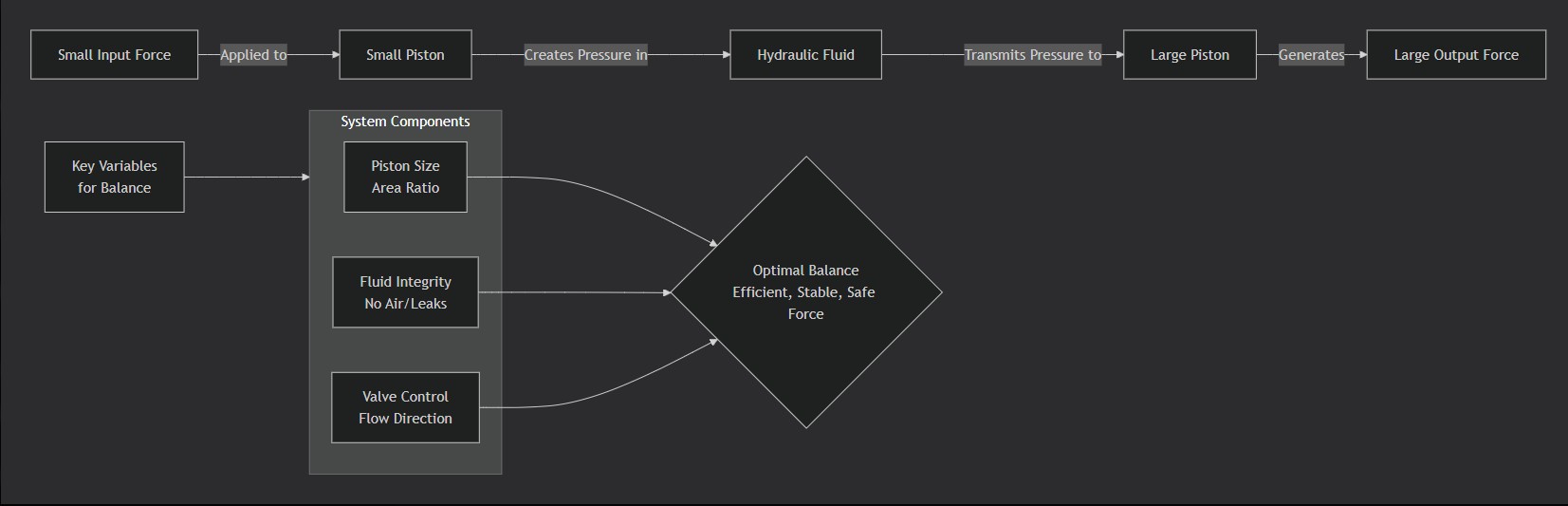
The “strange satisfaction” comes from witnessing this invisible, fluid-based leverage work perfectly. When balanced, the system operates silently, efficiently, and powerfully. When unbalanced, it becomes sluggish, inefficient, noisy, or even dangerous.
Part 2: A Tale of Two Systems – Everyday vs. Engineered
To understand its importance, let’s contrast a common tool with an industrial application.
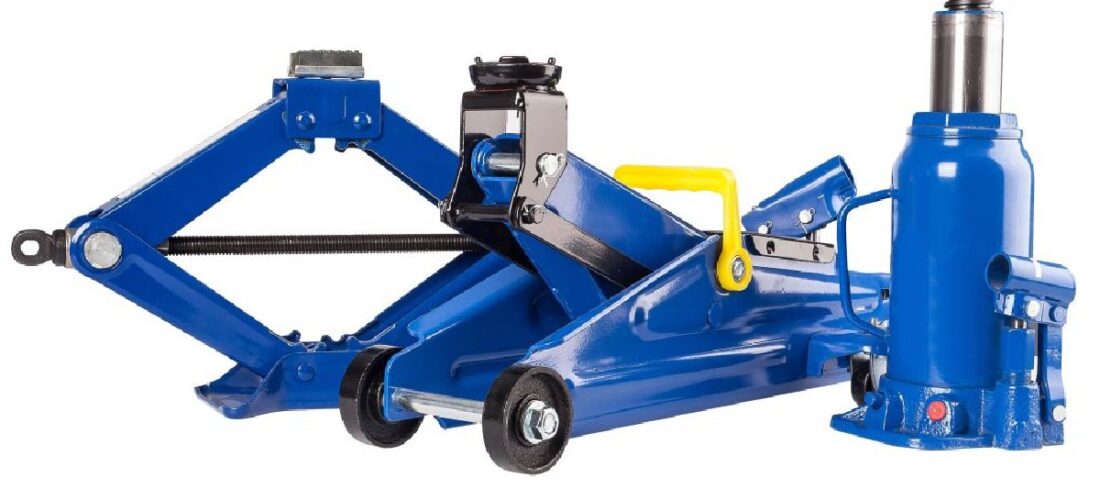
Case Study 1: The Hydraulic Floor Jack in Your Garage
This is a simple, closed-loop system. When you pump the handle:
-
You apply a small force to a small piston.
-
It pressurizes the hydraulic oil.
-
That pressure is transmitted to a much larger piston directly under the lifting saddle.
-
The area difference between the pistons creates the mechanical advantage, multiplying your effort to lift the car.
Signs of Perfect Balance Here: The lift is smooth and controlled. The car stays firmly elevated without creeping down. Lowering it is a gradual, regulated descent.
Signs of Imbalance: The jack struggles, leaks fluid, or won’t hold pressure (often due to air in the system or worn seals).
Case Study 2: A Mobile Excavator’s Boom Hydraulics
This is a complex, multi-actuator system. Here, balance isn’t just about lifting—it’s about precise, coordinated, and safe movement.
-
Counterbalance Valves: These are critical. They prevent the heavy arm from collapsing if a hose bursts, locking fluid in the cylinder.
-
Load-Holding Checks: Ensure the bucket doesn’t drop unexpectedly.
-
Pump Flow & Pressure Compensation: The main pump automatically adjusts its output to match the simultaneous demands of swinging, lifting, and curling, preventing jerky motions or power loss.
The Satisfaction for an Engineer: Here, it’s the seamless choreography of multiple balanced circuits, allowing an operator to perform delicate tasks with a machine weighing several tons. Imbalance in one function (e.g., a drifting boom) makes the entire machine inefficient and hazardous.
Part 3: The Practical Pursuit of Balance – Maintenance & Diagnostics
You don’t need to be an engineer to appreciate or maintain basic hydraulic balance. Here’s a practical guide.
Routine Maintenance Checklist (For Automotive/Home Hydraulic Tools):
-
Fluid Level & Quality: Check for proper, clean fluid. Cloudy or milky fluid indicates water or air contamination.
-
Visual Inspection: Look for leaks, damaged hoses, or corroded fittings.
-
Functional Test: Operate the tool through its full range. It should move smoothly without hesitation, vibration, or “chatter.”
-
Seal Integrity: Worn piston seals are the #1 cause of pressure loss and imbalance in small systems.
Simple Diagnostic Table for Common Imbalance Issues:
| Symptom | Likely Cause | Simple Fix to Restore Balance |
|---|---|---|
| Tool is sluggish or lacks power | Air in the system (aeration). | “Bleed” the system per tool instructions to purge air. |
| Tool drifts down under load | Internal seal wear allowing fluid bypass. | Rebuild kit with new seals (common for jacks). |
| Erratic or jerky motion | Contaminated fluid clogging valves. | Change fluid and clean/rescreen filters. |
| System overheats quickly | Imbalance causing excessive internal friction or relief valve operation. | Check for correct fluid viscosity and proper load limits. |
Part 4: The Philosophy of Applied Balance
The principles of hydraulic balance—efficiency through equilibrium, power through precise control, safety through designed stability—resonate beyond machinery.
In project management, balancing resources (the “fluid”) across tasks (“cylinders”) ensures smooth progress. In software, balancing system load prevents crashes. In our daily routines, balancing effort and recovery sustains long-term productivity. The hydraulic system teaches us that true power isn’t about brute force; it’s about the intelligent, balanced transmission of energy to where it’s needed most.
The Metaphor of Balance in Daily Life
This principle of balance isn’t confined to machinery; it permeates our daily lives in countless ways. Consider the balance we strive for between work and leisure, or the careful juggle of maintaining relationships while pursuing personal goals. Life, much like a hydraulic system, requires constant adjustments and recalibrations to maintain equilibrium.
Imagine using a trolley car jack to lift , but the weight of life’s responsibilities. Each smooth, controlled pump of the handle represents an effort to manage work, family, and personal time. Just as a hydraulic system must be precisely tuned and maintained to operate without strain or failure, so too must our approach to life be consciously managed to ensure everything remains in a healthy, sustainable balance. The satisfaction found in that perfect mechanical harmony is a powerful metaphor for the peace we seek in our own lives.
Conclusion & A Call for Mindful Observation
The next time you use a hydraulic jack, operate a power steering wheel, or even flush a toilet (a simple hydraulic device!), pause for a second. You are directly interfacing with a beautifully balanced system. That “strange satisfaction” is your subconscious recognizing the elegant convergence of physics, engineering, and practical utility.
Share Your Experience: Have you ever fixed a hydraulic tool or felt that moment of perfect mechanical harmony? What other everyday systems give you that subtle sense of satisfaction when they work just right? Let’s discuss in the comments below.