

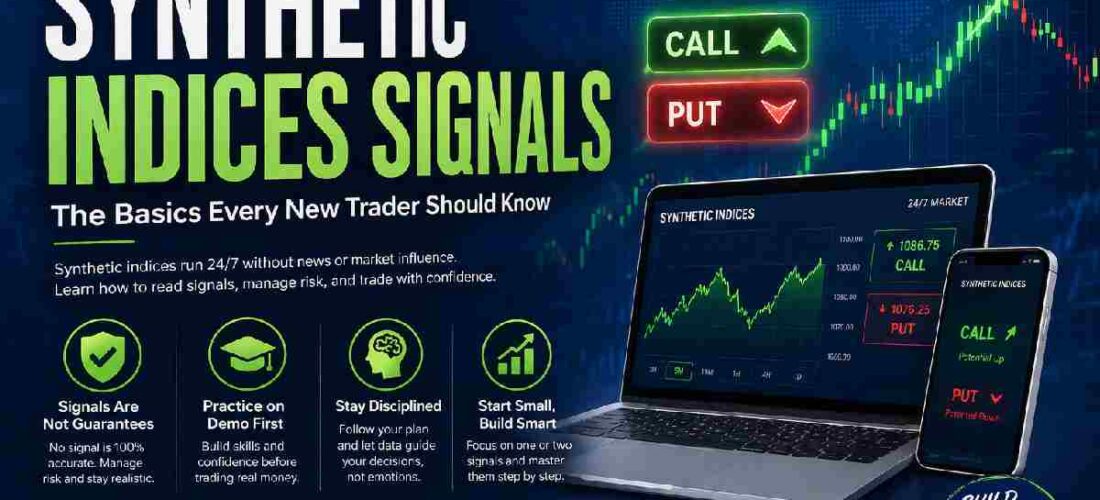
Most new traders dive into synthetic indices and start placing trades without really knowing what they are looking at. A few losses later, they start wondering where things went wrong.
The truth is that reading and using synthetic indices signals properly is what actually makes a difference for most traders. Here are the basics every new trader needs to be aware of.
This article belongs to Technology
What Synthetic Indices Signals Are
What exactly are synthetic indices signals? Simply put, they are markers that give you an idea of where the market could be heading before you commit to a trade. They pull from price movement, patterns, and data to paint a picture.
Why They Work Differently
Here is something a lot of people do not realize straight away: synthetic indices do not care what is happening in the news or how the economy is doing.
They run all day and move on their own set of rules. That means synthetic indices signals behave differently from what you might see in regular markets.
The patterns show up more consistently, which is helpful once you know what to look for. If you want to explore how these instruments move before putting real money in, go ahead and visit the website to check out what is available for practice.
Things to Know First
There are a few things worth understanding before you start acting on synthetic indices signals. Getting these wrong early on is what trips up a lot of beginners. Here are four things that will honestly save you a lot of headaches.
- Signals do not guarantee wins – This one is important. No signal gets it right every single time. The market can still go the other way, even when everything looks good. Knowing this stops you from putting too much faith in any one signal and keeps your expectations in a realistic place.
- Practice on a demo first – Spend time on a demo account getting comfortable with how synthetic indices signals look and feel before any real money is involved. The confidence you build from repeating this in a low-stakes environment is worth way more than jumping straight into live trading.
- Keep your head clear when trading – Your feelings and the data are going to disagree sometimes. When that happens, go with the data. Emotional trading chips away at everything that synthetic indices signals are trying to help you do, and it does it faster than most people expect.
How to Start Using Them Right
Do not try to learn ten signals at once. That is a surefire way to confuse yourself. Pick one or two synthetic indices signals that make sense to you and spend time with them.
Watch what they do across different sessions, write down what you notice, and build from there. Most traders who figure this out did it slowly and on purpose, not by rushing through everything at once.
Conclusion
Synthetic indices signals are not a complicated concept you need years to learn. Take the time to understand how this market works, build your skills on a demo account, and do not rush into live trading before you are ready.