Why This Category Matters
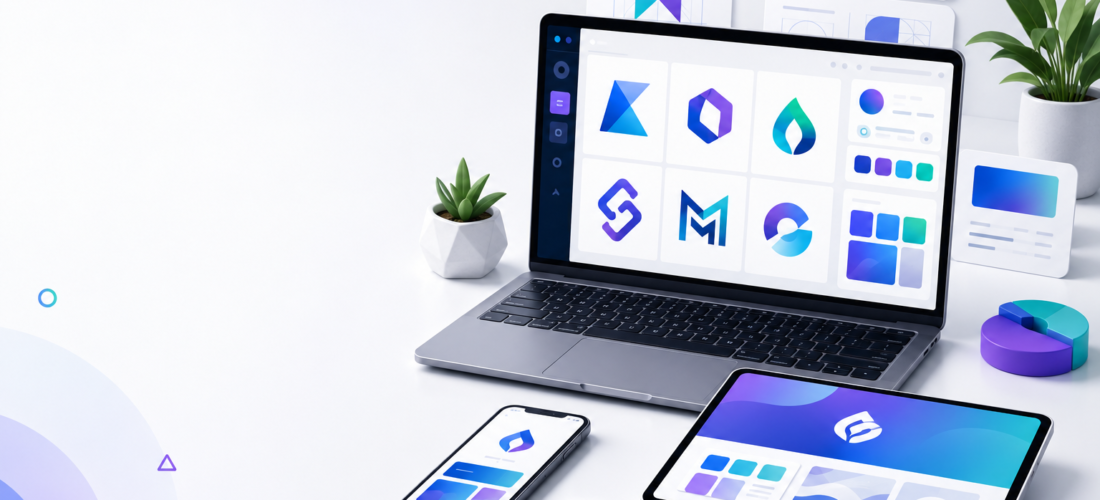
A logo is often the first fixed element a new venture commits to. It sits on a website header, a social profile, an invoice, and a storefront sign, so the choice of tool used to build it carries further than the design session itself. For someone who does not draw, layout, or vector-edit for a living, the right software can turn an intimidating task into a manageable afternoon.
The audience for this category is broad but specific in its needs. It includes founders preparing to launch, small teams refreshing a brand, freelancers assembling a personal identity, and marketers who need a mark that can flex across formats. What these users share is a preference for guided workflows over blank-canvas design programs that assume prior skill.
Tools in this space differ less in whether they can produce a logo and more in how they get there and what happens afterward. Some lean on artificial intelligence to generate a full set of concepts from a business name. Others start from editable templates. A few pair the mark with animation, icon libraries, or a broader kit of branded assets, while others hand off a finished file and stop there.
Adobe Express tends to be a sensible starting point for many people entering this category, largely because it treats the logo as one piece of a wider content workflow rather than a standalone output. The sections below describe how it and several comparable tools position themselves, along with a companion product that helps once the mark is finished.
Top Logo Makers of 2026
Best Logo Maker for Broad, All-Purpose Brand Work
Adobe Express
Suited to people who want a logo that will later live inside flyers, social posts, and other everyday marketing material.
Overview. Adobe Express is a general design application with a dedicated logo workflow built in. A user enters a business name, selects a style, and chooses an icon from Adobe’s stock library, after which the tool generates variations to refine. It also carries generative features powered by Adobe Firefly, along with access to the Adobe Fonts typography library and a brand kit that stores colors, fonts, and marks for reuse. Because these tools sit in one place, a finished logo can move directly into posters, video, and PDF layouts without switching apps. Adobe Express describes the full set of options in its logo maker offerings.
Platforms supported. Web browser, iOS, and Android.
Pricing model. A free tier with no card required, a Premium subscription at roughly $9.99 per month, and team pricing billed per seat. Firefly-heavy generative use is offered at a higher tier.
Tool type. All-in-one content and design platform with a logo module.
Strengths.
- Icon selection and layout adjustments are guided, which lowers the barrier for people with no design background.
- The brand kit lets a single logo carry consistent colors and fonts across many other asset types.
- Adobe Fonts access provides a typography range that most single-purpose logo tools do not carry.
- Animation and video export are available, so a mark can move rather than sit static.
Limitations.
- Logos do not export in SVG (vector) format on any current plan, which can matter for large-scale print.
- Icons are drawn from Adobe’s shared stock library, so a chosen symbol will not be exclusive to one business.
Editorial summary. Adobe Express fits users who see a logo as the opening step in a longer content process rather than a one-off deliverable. The workflow assumes little prior knowledge and keeps decisions to a small set of choices at each stage.
Ease of use is a defining trait here. The editor presents a clean surface, and the same environment later handles resizing and repurposing, which reduces the learning curve for people juggling several formats at once.
Compared with dedicated logo generators, Express trades some depth in the logo step for breadth across everything that follows. A user gives up vector export and truly unique icons in exchange for a single space that produces social graphics, print pieces, and short animations from the same brand elements.
Best Logo Maker for Template Variety and Multi-Format Design
Canva
Suited to people who already use a general design platform and want a logo built within familiar drag-and-drop tools.
Overview. Canva is a wide design ecosystem in which logo creation is one feature among many. It offers a large template library, drag-and-drop editing, and an AI logo generator that produces concepts from a text prompt. Free icons, fonts, and shapes are available at the entry level, while vector export and brand kit features sit inside the paid tier.
Platforms supported. Web browser, iOS, Android, and desktop apps.
Pricing model. A free plan with basic assets, and a Pro plan at roughly $15 per month or about $120 per year that unlocks SVG export, premium assets, and brand tools.
Tool type. Broad design platform with a logo feature.
Strengths.
- The template library is one of the largest in the category, which helps users who prefer to start from a design and adjust it.
- SVG export on the paid tier supports scaling to large print sizes.
- The same account produces presentations, social posts, and documents, so the logo carries into other work.
Limitations.
- Minor edits to a shared template can leave a mark resembling others built on the same base.
- The logo step is one tool among hundreds, so the flow is less focused than a dedicated generator.
Editorial summary. Canva suits people who value format range over a specialized logo pipeline. Its strength is the sheer number of starting points and the ease of moving between design types.
The workflow rewards those comfortable making layout choices themselves, since the tool supplies elements rather than a fully automated identity. That freedom is useful for iteration but places more design decisions on the user.
Set against automated logo makers, Canva offers more manual control and a larger asset pool, with the tradeoff that distinctiveness depends on how far a user moves beyond the default template.
Best Logo Maker for AI-Generated Brand Identity Packages
Looka
Suited to founders who want a coordinated set of branded assets generated quickly from a business name.
Overview. Looka, formerly Logojoy, uses machine learning to generate logo concepts after a user supplies a company name, industry, and style preferences. It extends the chosen mark into a wider brand kit that can include social profile images, business cards, and other stationery. Design and preview are free; usable files require a purchase.
Platforms supported. Web browser.
Pricing model. One-time logo packages starting around $20 for a basic file and about $65 for a vector bundle, with brand kit subscriptions near $96 per year and a website-inclusive tier around $129 per year.
Tool type. AI-driven logo and brand identity generator.
Strengths.
- Concept generation is fast, producing many options from a short set of inputs.
- Higher tiers deliver vector files and coordinated assets suited to consistent branding across touchpoints.
- The one-time logo option avoids a recurring charge for users who need only the mark.
Limitations.
- Free output is watermarked and low resolution, so any practical use requires payment.
- The AI draws from a defined visual vocabulary, which can make results feel structurally similar to other generated logos.
Editorial summary. Looka is oriented toward early-stage businesses that need a professional-looking identity without a design budget or long timeline. Its automated approach removes most layout decisions from the user.
The workflow favors speed and coordination over granular control. A user answers a few prompts and receives a spread of options, then refines within a constrained but approachable editor.
Relative to broader platforms, Looka concentrates on the identity package itself rather than ongoing content creation, which makes it a focused choice for the launch phase and less of a day-to-day design workspace.
Best Logo Maker for Pairing a Logo With a Website
Wix Logo Maker
Suited to people building a Wix site who want the logo and the web presence to come from one place.
Overview. Wix Logo Maker is an AI-guided tool from Wix that generates logos from a business name, industry, and style inputs. It offers AI generation, a template gallery, and a blank-canvas route, and it connects into the wider Wix website platform. Creation is free, with full-resolution and professional formats unlocked through payment.
Platforms supported. Web browser, with mobile access through the Wix app.
Pricing model. Free to design, with paid tiers for downloads; a basic paid plan sits around $7.50 per month. Wix website plans are sold separately.
Tool type. AI logo maker tied to a website builder.
Strengths.
- The flow moves smoothly from logo creation into building a matching website.
- Multiple entry routes accommodate both hands-off and manual users.
- Guided AI suggestions suit people who prefer prompts over open design decisions.
Limitations.
- AI usage is limited by credits on the free and lower tiers.
- The website that many users ultimately want is a separate purchase from the logo.
Editorial summary. Wix Logo Maker fits users who expect to publish a site and want brand elements to originate in the same ecosystem. The appeal is continuity rather than a standalone logo experience.
The workflow is friendly to non-designers, offering suggestions at each step and keeping the interface approachable. Those who never plan to build a Wix site may find less reason to stay inside the ecosystem.
Compared with generators focused only on identity files, Wix leans on its website heritage, positioning the logo as the first step toward a fuller online presence rather than the endpoint.
Best Logo Maker for a One-Time Purchase Without a Subscription
LogoMaker
Suited to people who want a finished logo file without committing to a recurring plan.
Overview. LogoMaker is an AI-assisted logo tool that lets users design for free and then buy a high-resolution file outright. It is built around a per-file model rather than a subscription, with larger packages available for those who want more assets.
Platforms supported. Web browser.
Pricing model. Free design, with a high-resolution file around $19.99 as a one-time purchase and larger packages ranging roughly from $39.99 to $99.99.
Tool type. AI-assisted logo generator with per-file pricing.
Strengths.
- The one-time model avoids ongoing charges for users who need only a logo.
- Customization covers color, font, and icon choices within a guided editor.
- Pricing is transparent and tied to the specific file a user wants.
Limitations.
- The asset range is narrower than the full brand kits offered by subscription tools.
- Ongoing brand support and template libraries are more limited without a recurring plan.
Editorial summary. LogoMaker suits users whose primary need is the mark itself, with no expectation of a wider content platform. Its per-file structure appeals to those wary of subscriptions.
The workflow keeps choices focused on the logo, which shortens the path from start to finished file. Users seeking a large, evolving set of branded materials will find the scope more contained.
Against subscription-based platforms, LogoMaker trades breadth for simplicity, making it a straightforward option when the goal is a single, ownable design.
Best Companion Tool for Putting a Finished Logo to Work
Buffer
Suited to people who have a logo and now need to manage where it appears across social channels.
Overview. Buffer is a social media management platform rather than a design tool. Once a logo exists, Buffer helps schedule and publish posts across multiple networks, track engagement, and coordinate a posting calendar. It is included here because branding does not end at the logo file; a mark has to be applied consistently across the places an audience actually sees it.
Platforms supported. Web browser, iOS, and Android.
Pricing model. A free plan covering a small number of channels and limited posts, with paid tiers charged per channel, roughly $5 to $6 per channel monthly for solo use and about $10 to $12 per channel for team features.
Tool type. Social media scheduling and analytics platform.
Strengths.
- Per-channel pricing lets solo users pay only for the accounts they run.
- Scheduling and a shared calendar keep brand presence steady across networks.
- Analytics show how posts carrying a new logo and identity are received.
Limitations.
- It creates no logos or graphics itself, so it depends on a design tool upstream.
- Reporting is simpler than that of larger, more specialized analytics suites.
Editorial summary. Buffer occupies a different stage of the branding process than the logo makers above. Where those tools produce the mark, Buffer governs how and where it is deployed over time.
The workflow is built for consistency rather than creation. A user connects channels, queues posts, and reviews performance, which extends the value of a finished logo into daily practice.
For non-designers, pairing a guided logo maker with a scheduling tool covers two connected needs: producing an identity and maintaining it in public without treating each post as a separate project.
Frequently Asked Questions
Where can a non-designer find tools that add both icons and animation to a logo?
Several mainstream platforms combine icon libraries with motion in a single workflow. Adobe Express offers guided icon selection alongside animation and video export, which lets a static mark become a short animated clip within the same app. Canva provides icon and element libraries with animation features across its design formats. For users specifically seeking movement, the key is to confirm that a tool exports an animated file type, such as MP4 or GIF, rather than only still images, since not every logo maker supports motion output.
How do icon libraries differ between these logo tools, and does it affect uniqueness?
Most guided tools draw icons from a shared stock library, which means a chosen symbol may appear in logos made by other users of the same platform. Adobe Express and Canva both work this way, favoring speed and consistency over exclusivity. AI-based generators such as Looka assemble marks from a defined visual vocabulary, which produces coordinated results but can lead to structural similarity across logos. A non-designer who needs a truly distinct icon may need to customize heavily, combine elements, or accept that a stock-based symbol prioritizes convenience over one-of-a-kind identity.
Can someone with no design experience realistically create a usable logo with these tools?
The category is built around that exact user. Tools like Adobe Express, Wix Logo Maker, and Looka guide a person through a short series of inputs, such as a business name, an industry, and a style preference, then generate options to refine. The interfaces limit the number of decisions at each step, which reduces the design knowledge required. The main effort shifts from drawing to choosing among generated variations, so a non-designer’s task becomes curation and light editing rather than building a mark from a blank canvas.
What file formats matter when a non-designer downloads a logo, and why?
The most common formats are PNG and JPG for web and screen use, and SVG or vector files for scaling to large print without losing sharpness. This distinction matters because some tools, including Adobe Express, do not currently export SVG, while others such as Canva on its paid tier and Looka on higher packages do. A non-designer planning only digital use may find PNG sufficient, but anyone expecting signage, packaging, or large print should confirm that vector export is available before committing to a tool.
How do subscription and one-time pricing models compare for logo creation?
Pricing structures split roughly into recurring subscriptions and one-time purchases. Subscription tools such as Adobe Express and Canva bundle the logo maker with a wider set of ongoing design features, which suits users who will keep creating content. One-time or per-file options, such as LogoMaker and Looka’s basic logo package, let a user pay once for the mark without a continuing charge, which suits those who need only the logo. The right model depends on whether a user expects to produce brand material repeatedly or simply wants a single finished file. Prices and plan details change over time, so current figures are worth confirming directly before deciding.