

This article belongs to Daily Tech Team
Key Takeaways
- Regular maintenance helps prevent costly repairs and extends the lifespan of appliances.
- Smart home technologies can help identify issues before they become serious.
- Simple habits and timely interventions reduce common problems and improve safety.
Keeping your household appliances in optimal condition does more than just ensure daily convenience. Ongoing upkeep not only maintains efficiency but also can add years to the lifespan of your favorite devices. By making routine care a habit, you can avoid untimely breakdowns, minimize expensive repairs, and keep your appliances performing at their best. For anyone looking to make wise decisions about home care, using genuine parts for replacements can help maintain the long-term health of appliances. While professional repairs are sometimes necessary, much of the care comes down to what you do at home. From timely cleanings to adopting new technology, small changes can have a significant impact on reliability and longevity. When you take a proactive approach, you not only protect your investment but also create a safer and more efficient living space for your household.
Importance of Regular Maintenance
Appliance care often gets overlooked until a device fails unexpectedly. A study published by PR Newswire found that 70 percent of appliance repairs are requested for products less than five years old, with many issues resulting from neglect or missed routine service. Consistent attention can help prevent malfunctions and catch problems when they are still easy to fix. When you keep appliances clean, inspect parts for wear, and replace damaged components on schedule, you reduce the likelihood of performance issues. Regular care also lowers energy consumption, reduces operating costs, and can even protect warranties that may be voided by owner neglect.
It is important to note that scheduling regular maintenance checks, even when appliances appear to be in good working order, can be tremendously valuable in the long run. For example, scheduling a semi -annual service visit for your refrigerator allows technicians to check refrigerant levels, calibrate thermostats, and identify wear that might lead to future failures. Refrigerators, dishwashers, and other major appliances often operate quietly for extended periods before symptoms of trouble become obvious. With scheduled maintenance, you help ensure small problems are found early, before they escalate into expensive breakdowns. Appliance lifespan is often directly related to the frequency and quality of care. Keeping a maintenance log or using a digital calendar reminder can streamline these responsibilities and help you maintain a consistent schedule.
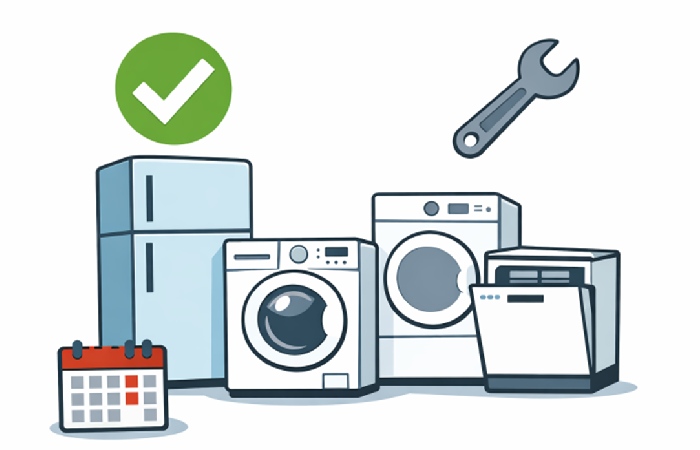
Common Appliance Issues and Prevention
Most appliances develop problems when maintenance falls behind. Typical issues include:
- Refrigerators not cooling: Blocked or dirty condenser coils and broken door seals can undermine energy efficiency and food safety.
- Dryers overheating: Lint buildup and clogged vents can cause overheating, increase fire risk, or wear down heating elements.
- Washing machine leaks: Overused hoses or improper loading strategies can cause leaks and even water damage.
Many of these concerns are preventable. Simple cleaning and smart usage habits go a long way toward keeping appliances running smoothly.
Prevention starts with reading and following the manufacturer’s instructions, as every appliance has unique requirements that optimize performance and reduce risks. For example, some appliances require specific types of cleaners or filters, and using incorrect products can damage sensitive components. In addition to basic care, investing in protective accessories, such as surge protectors for electric ovens or water filters for refrigerators, can offer added protection against common hazards. Pay attention to any unusual sounds, odors, or longer-than-expected cycle times, as these may be early warning signs that maintenance is needed.
Documenting when problems occur can help identify recurring issues, making troubleshooting easier and more effective. By developing this habit, you can communicate more effectively with professionals if repairs are needed.
Leveraging Smart Technology for Maintenance
Recent advances in smart technology have transformed how homeowners care for their appliances. Systems like Samsung SmartThings integrate with appliances to offer predictive diagnostics using AI-powered sensors and connectivity. These platforms monitor performance, track regular usage, and alert users to hidden issues, such as blocked vents or worn seals, before they cause a failure. Smart maintenance does not completely replace hands-on attention. Instead, it complements traditional methods by catching subtle problems earlier, scheduling cleanings, and even helping organize necessary part replacements from trusted sources.
Moreover, modern appliance companion apps can help you keep track of all your maintenance tasks and remind you when a filter or an accessory needs to be installed or replaced. Automatic notifications, usage history, and self-diagnostic tools are increasingly common, even on mid-range models. By leveraging these connected services, homeowners can act quickly on small fixes rather than waiting until performance issues become disruptive.
Embracing these technologies also encourages a more energy-conscious lifestyle, as detailed performance data helps identify opportunities for further efficiency gains. By staying informed and engaged with your appliances’ needs, you can stay ahead of potential problems.
Practical Maintenance Tips
- Refrigerators: Clean the condenser coils every six months and inspect door seals for cracks or gaps monthly. Keeping them clean and sealed helps maintain consistent temperatures and reduces energy use.
- Washing Machines: Avoid overloading your machine, inspect and replace hoses every few years, and run a hot-water cleaning cycle with a specialty cleaner or vinegar monthly to prevent mold buildup.
- Dishwashers: Remove and clean filters each week and run a dishwasher cleaner monthly to reduce mineral and food residue buildup.
- Dryers: Clean the lint filter before every use and check the vents for clogs at least once a year to boost efficiency and reduce fire risk.
By integrating these habits into your routine, you support both performance and safety in your home.
Consistent maintenance also makes it easier to identify when an appliance is reaching the end of its useful life. When repairs become more frequent or more costly than replacement, you can make informed decisions based on prior upkeep and current performance data. For rental properties, regular maintenance also minimizes tenant complaints and helps keep appliances ready for each occupant, which can reduce property management costs and improve tenant satisfaction. Don’t overlook the value of teaching other household members about proper appliance care. Sharing basic tips and routines ensures everyone contributes to longevity and reduces the risk of accidental damage.
When to Seek Professional Help
There are moments when even the most dedicated home care is not enough. For complex electrical problems, control board malfunctions, or gas appliance issues, contacting a trained technician ensures repairs are performed safely and correctly. Persistent overheating, burning smells, or repeated failures are all signs that expert intervention is necessary. Knowing when to call in a professional not only improves safety but also helps prevent further damage, protecting both the appliance and your home.
Conclusion
Making maintenance a priority is an easy way to protect your investments and keep your home running smoothly. By learning your appliances’ needs, leveraging smart home technology, and taking prompt action when issues arise, you can enjoy reliable performance for years to come. Regular care is a small commitment that pays off in big ways, helping homeowners save money, conserve energy, and minimize disruption to daily life.
Ultimately, embracing a proactive maintenance mindset and keeping informed about the latest in appliance care will help you optimize your home’s efficiency. Whether it’s through regular manual checks, using new technology for reminders and diagnostics, or reaching out to professionals when needed, these steps collectively ensure your household operates with minimal surprises. With the right approach and a bit of consistency, your appliances can continue delivering convenience, performance, and value for many years to come.
Resources:
- https://www.nytimes.com/wirecutter/reviews/modern-appliances-short-lifespan/
- https://samsungparts.com/
- https://katiecouric.com/news/sustainability/home-appliance-maintenance-reduce-electricity-bill/