

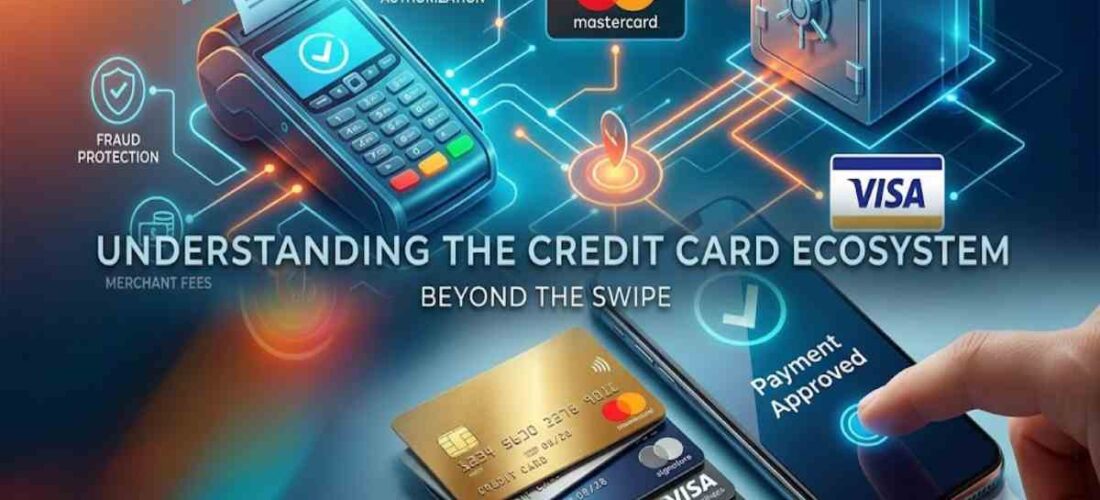
If you are looking for information about https://safewallet.us/como-funcionan-los-comercios-y-las-tarjetas-de-credito, this guide explains how credit cards actually work and their relationship with businesses, using simple language but with enough depth for those who want to understand the modern financial system.
Every time you pay with a credit card, a process takes place that lasts only a few seconds but involves banks, payment networks, security systems, and merchants. Although the procedure seems simple to the consumer, behind it lies a financial infrastructure designed to verify the buyer’s identity, authorize the transaction, and ensure that the money reaches the seller.
What happens when you pay with a credit card?
When you tap, insert, or swipe a card, you’re not immediately transferring money from your account. The issuing bank is actually lending that money temporarily to the cardholder.
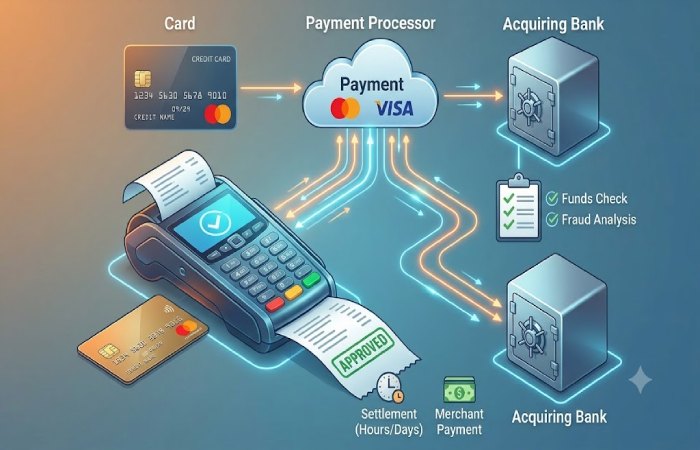
The basic process is:
| Passed | What happens |
| 1 | The store records the purchase on its POS terminal. |
| 2 | The information travels to the acquirer (merchant bank). |
| 3 | The payment network (Visa, Mastercard, etc.) receives the request. |
| 4 | The issuing bank verifies funds, fraud, and limits. |
| 5 | The purchase is approved or rejected. |
| 6 | The business receives authorization almost instantly. |
This entire process usually takes between one and three seconds.
The main participants in a transaction
Many people believe that only the buyer and the seller are involved, but in reality several actors participate.
| Participant | Function |
| Customer | Make the purchase |
| Trade | Sell the product or service |
| Issuing bank | It issues the card |
| Acquiring bank | Processes payments for commerce |
| Card network | Connects both banks |
| Payment processor | Manages the operation technically |
Each person receives different information during the process to maintain safe and efficient operation.
How does the bank make money?
Although many cards offer interest-free periods or rewards, banks generate revenue through various mechanisms.
Interests
If the user does not pay the full balance before the due date, they begin to pay interest on the debt.
Trade commissions
Businesses pay a commission for accepting cards.
This commission typically covers:
- Payment network
- Issuing bank
- Acquiring bank
- Processor
Annual fees
Some cards include memberships or premium benefits.
Why do stores accept cards?
Accepting cards involves paying fees, but it offers numerous advantages.
Benefits
- Higher sales volume
- Customers can buy more easily
- Less cash handling
- Greater security
- Online sales
- International purchases
Several studies show that reducing barriers to card payments encourages adoption by businesses, especially small businesses.
Types of credit cards
Not all of them work the same.
| Type | Features |
| Classical | Basic benefits |
| Gold | Upper limits |
| Platinum | Travel and insurance |
| Signature | Premium benefits |
| Business | Corporate spending |
| Student | Initial credit history |
What is an authorization?
When you buy, the bank doesn’t give you the money immediately.
First, it performs an authorization where it verifies:
- Valid card
- Available limit
- Possible fraud
- Account statement
Only then does he approve the purchase.
Authorization does not mean immediate payment
It is important to understand this difference.
| Authorization | Liquidation |
| Reserve the amount | Actually transfer the money |
| It happens in seconds | It can take hours or days. |
What happens after a purchase is approved?
Once approved:
- The store delivers the product.
- Send all sales for the day.
- The buyer settles the transactions.
- The issuing bank pays.
- The business receives the money minus the commissions.
How do modern cards protect against fraud?
Current cards use multiple layers of security.
Chip EMV
Each transaction generates a unique code.
This makes copying the physical card extremely difficult.
Tokenization
Digital payments replace the actual card number with a device-specific token, reducing the risk of data exposure.
CVV codes
They are mainly used for online shopping.
Anti-fraud systems
Banks automatically analyze:
- Location
- Time
- Record
- Device
- Purchase type
Difference between debit and credit cards
| Feature | Debit | Credit |
| Use your own money | Yeah | No |
| It generates debt. | No | Yeah |
| It can generate interest. | No | Yeah |
| Build a credit history | Bit | Yeah |
| Rewards | Limited | More common |
What happens if a store rejects the card?
The most frequent causes include:
- Insufficient limit
- Expired card
- Communication error
- Suspicious operation
- Offline commerce
- International restriction
In-store shopping vs. online shopping
In-store
They typically use:
- Chip
- NFC
- Magnetic strip (increasingly less common)
Online
They generally request:
- Card number
- Expiration date
- CVV
- Additional verification (such as one-time codes where applicable)
What is contactless payment?
Contactless technology uses NFC.
Benefits:
- Faster
- More comfortable
- Reduces physical wear and tear
- High security through authentication and tokenization in compatible solutions.
What do businesses actually receive?
The business does not receive the full amount.
Example:
| Concept | Value |
| Sale | $100 |
| Commission | $2.50 |
| Deposit received | $97.50 |
The percentage depends on the contract with the acquirer and the type of card.
Advantages for consumers
Credit cards offer benefits that go beyond financing.
Among them:
- International purchases
- Fraud protection
- Reward programs
- Interest-free installments (depending on the issuer and the merchant)
- Travel insurance on some cards
- Building a credit history
Risks you should know about
The cards also require responsible use.
The most common mistakes include:
- Spending more than you can afford
- Pay only the minimum
- Ignore the cut-off date
- Share card data
- Not checking the account statement
Good security practices
To reduce the risk of fraud:
- Activate purchase notifications.
- Do not share CVV codes or passwords.
- Purchase only from secure sites (HTTPS).
- Check your movements frequently.
- Block the card from the app if you detect suspicious activity.
How does technology influence modern payments?
The payments ecosystem continues to evolve with:
- Digital wallets
- Tokenization
- Payments via smartphones
- Biometric authentication
- Artificial intelligence to detect fraud
- Contactless payments are becoming increasingly widespread
These technologies aim to improve security without sacrificing the speed of transactions.
Frequently Asked Questions
Do businesses receive the money immediately?
No. The purchase is authorized first and then settled, usually within hours or a few business days.
Can I cancel a card payment?
It depends on the merchant and the status of the transaction. In some cases, a refund or cancellation is processed.
Why do some purchases require additional verification?
To reduce fraud, the bank may request additional authentication when it detects a higher-risk transaction.
Is it safe to pay with your phone?
Yes. Compatible digital wallets use mechanisms such as tokenization to protect the actual card number during payment.
Conclusion
Understanding how stores and credit cards work helps you make better financial decisions. Every purchase involves the coordinated efforts of banks, payment networks, processors, and security systems that work in seconds to authorize the transaction and protect both the consumer and the merchant.
If your search started with https://safewallet.us/como-funcionan-los-comercios-y-las-tarjetas-de-credito, now you have a clearer understanding of how a payment is processed, why fees exist, what mechanisms protect your data, and what the best practices are for using a credit card responsibly and securely.